Harvard GSD Thesis / Advisor: Tom de Paor
A dam in a national park is an inherent contradiction. Similarly, a park in wilderness is also a contradiction. Yet, these two contradictions are part of our reality; situated in a precarious middle ground, they affirm and deny the social/nature divide.
The idea of wilderness can be situated in 19th century discourse, a creation embedded with romanticism and a nostalgia for the vanishing American frontier. The Wilderness Act of 1964 solidified the term wilderness, defining it as: greater than 5000 acres with minimal human footprint, a place to visit and not dwell, a place for solitude or primitive recreation, and a place with historical, ecological, or educational values.
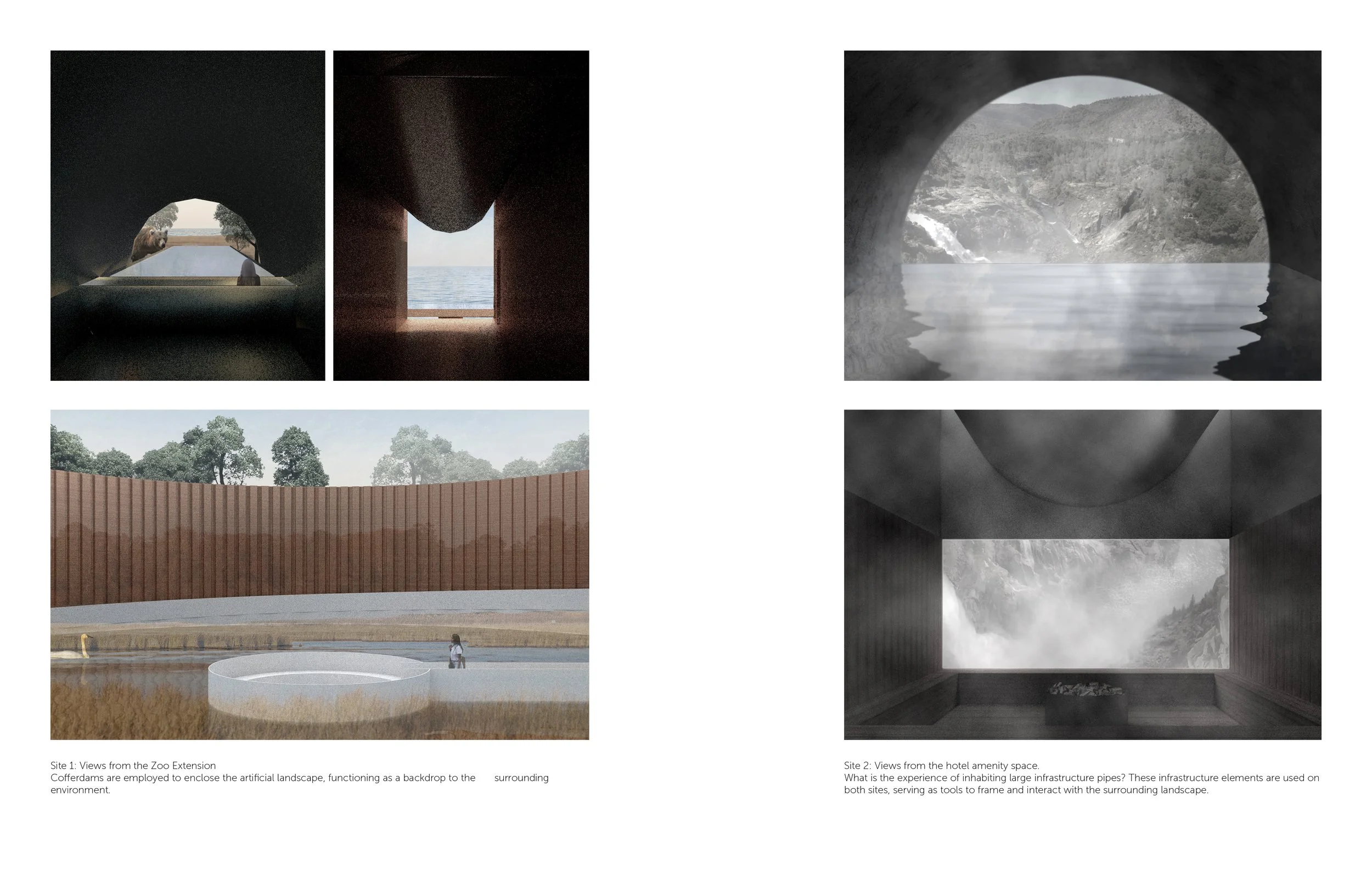
These definitions can be applied equally to infrastructure; they both inhabit a territorial scale, exemplify different qualities of the sublime, and relate to comfort. Most importantly, they are unfamiliar, untamed, and not intended for dwelling.
While domesticated wilderness is celebrated through national parks, large and complex infrastructure systems are hidden, buried by the architecture and erased from the collective imagination.
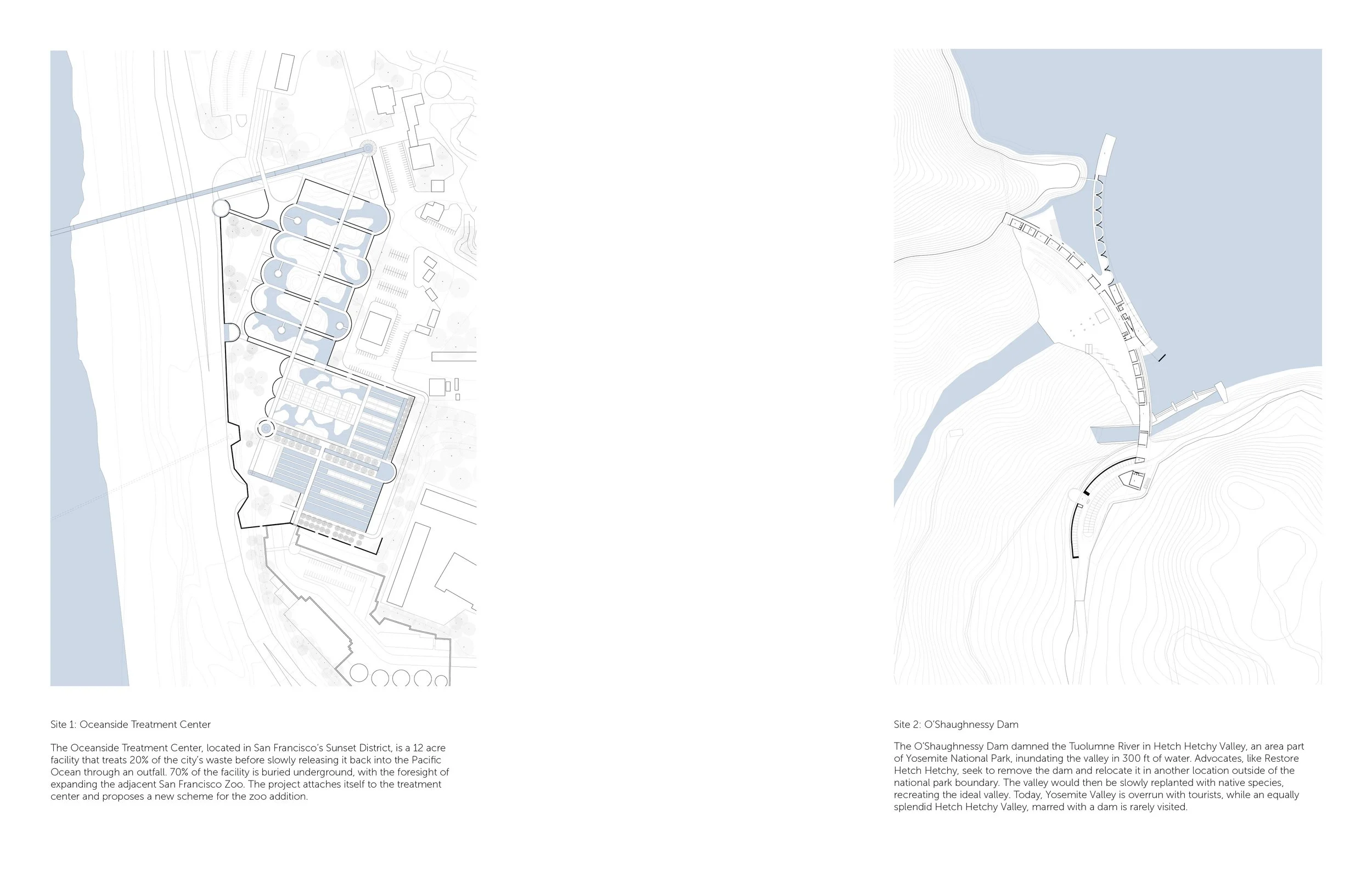
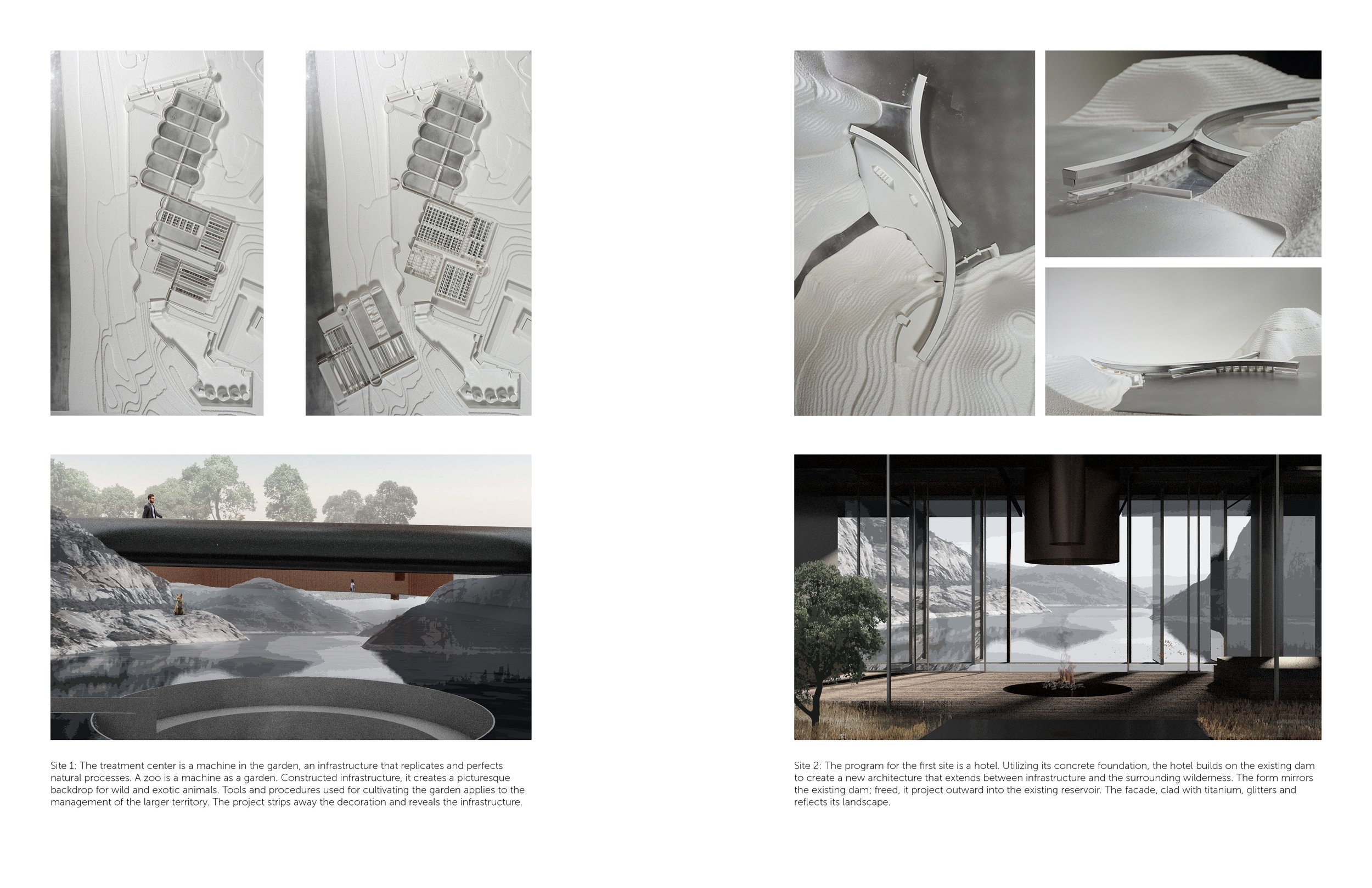
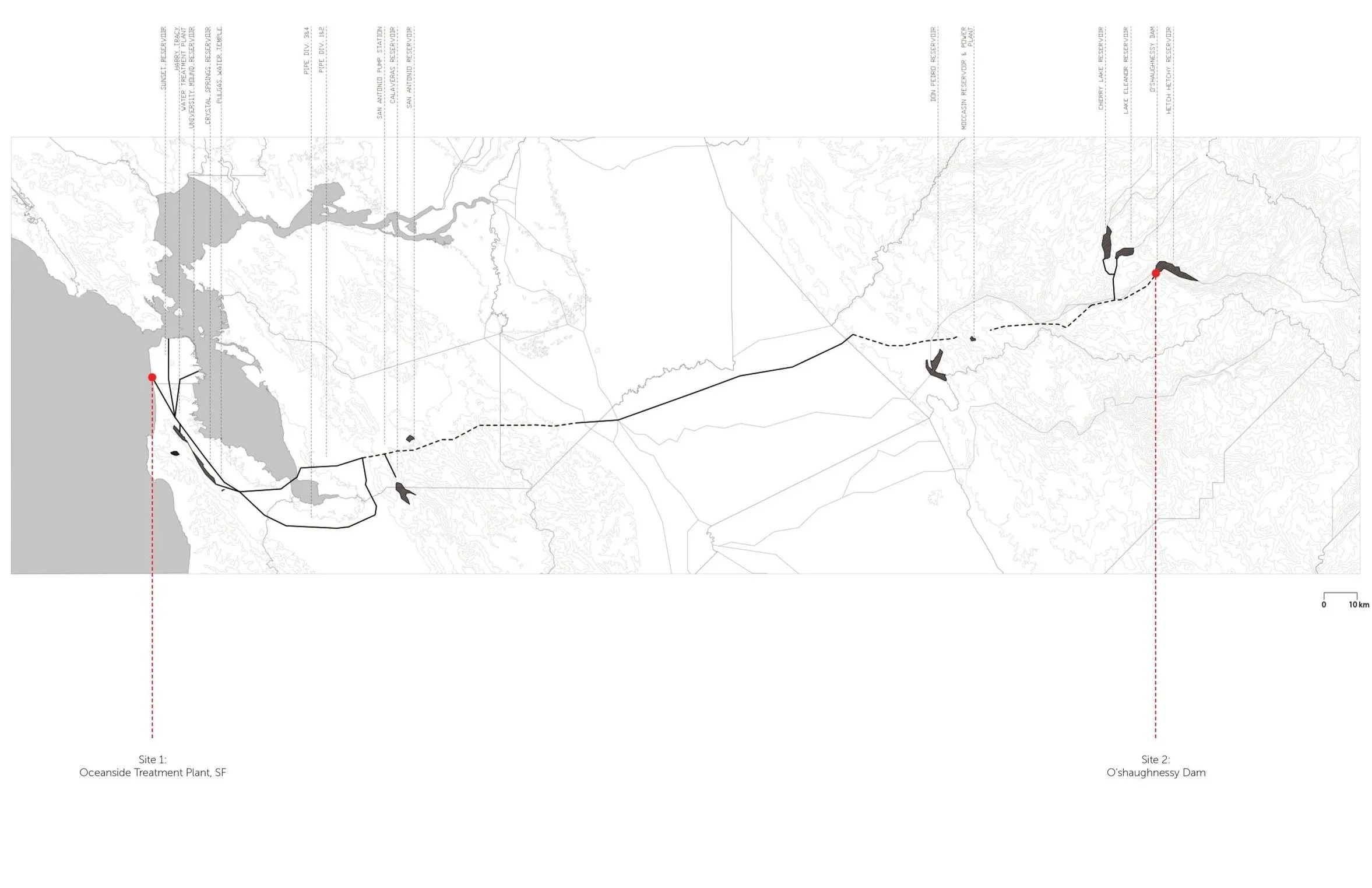
This thesis integrates a new structure into the Hetch Hetchy Reservoir and the Water System which provides water to the San Francisco Bay Area from the Sierra Nevada Mountain Range. Two sites are proposed: the beginning (in wilderness) at the O’Shaughnessy Dam in the Hetch Hetchy Valley, and in the end of the Hetch Hetchy pipeline, at the Oceanside Treatment Center in San Francisco.